9 Essential Total Body Weight Exercises for 2025 Fitness Success
Unlock true strength with 9 essential total body weight exercises for 2025. Ditch failed routines. Build mastery move better get real results that last.
2025 is the year you stop spinning your wheels. Most people feel trapped—tight, stiff, and frustrated. The same tired routines, the same lack of results. You want real change, not another empty promise.
Here’s the truth: total body weight exercises are the missing link. They unlock strength, skill, and results that stick. Forget machines—think mastery, control, and movement freedom.
This article delivers the 9 essential total body weight exercises every serious athlete needs for 2025. See why they work, and discover how to use them for lasting change.
Why Most Workouts Fail: The Hidden Problems with Conventional Fitness
Most people think more reps or heavier weights will finally get them “results.” But the truth? The gym is packed with frustrated bodies doing the same routines, locked in a loop. Every January, hope is high. By February, 80% have already quit. Why? Because conventional workouts promise progress, but only deliver plateaus. The grind gets you nowhere. You push, sweat, and wait for change. It never comes.
The Illusion of Progress: Why Most Routines Plateau
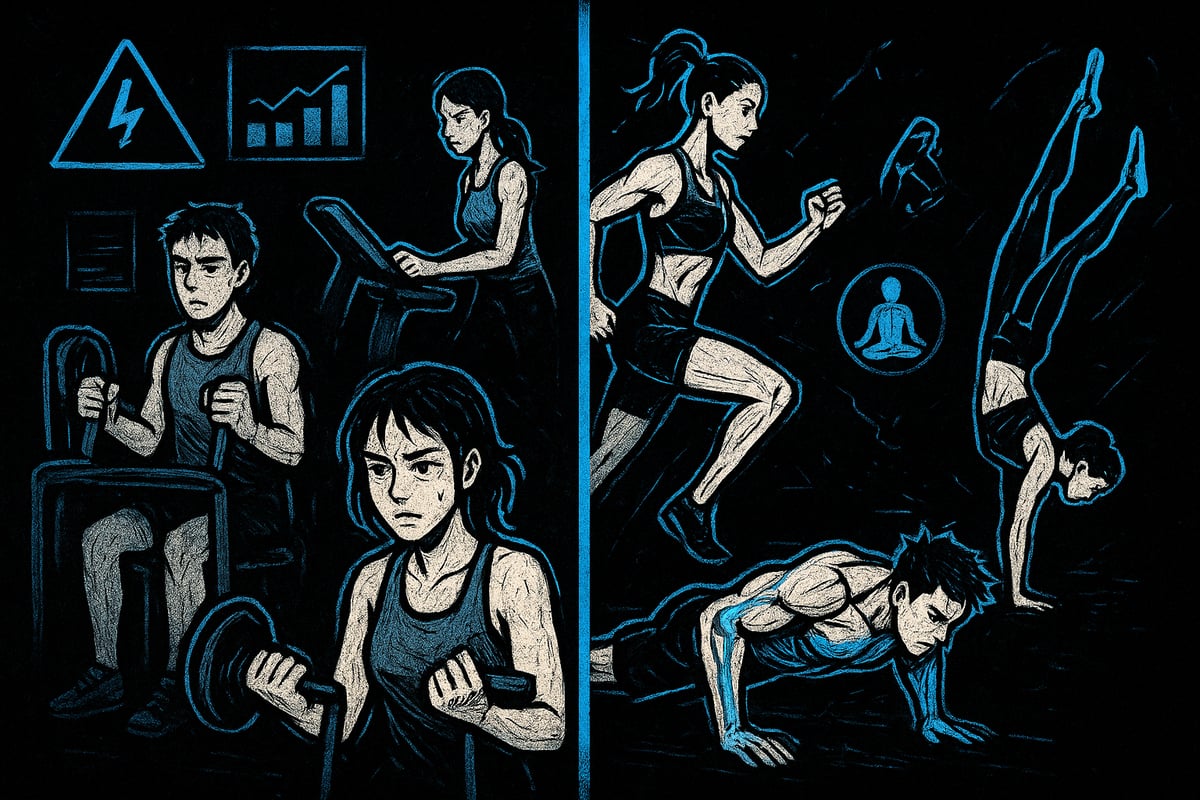
Walk into any gym. You’ll see the same tired faces grinding through identical sets, week after week. Machines tell you what to do. You add a few pounds, chase numbers, but your body barely changes. The illusion of progress is real. Eight out of ten new members vanish by February because they see no transformation. Repetition without adaptation is a dead end. If your routine lacks challenge and skill, it’s just busywork.
Total body weight exercises break this cycle. They force you to adapt, grow, and move with intent.
Neglecting Movement Quality and Body Mastery
Most mainstream programs ignore the basics: movement skill, flexibility, and control. Chasing big lifts without mastering your own body is like building a house on sand. Professional athletes know this. They invest in movement mastery first, power second. Flexibility and body awareness are not optional—they’re foundational. Without them, you’re stiff, slow, and one wrong move from injury.
Total body weight exercises demand precision and control. They teach you how to move, not just how to lift.
Injury, Burnout, and Unsustainable Training
The injury epidemic is real. Over 50% of gym injuries stem from poor technique, ego lifting, or skipping the basics. Machines and heavy weights mask your weaknesses. You push through pain, rack up overuse injuries, and wonder why your body breaks down. Burnout follows. Without skill progression and smart training, you’re gambling with your health.
Total body weight exercises rebuild your foundation. They help you earn your strength, protect your joints, and train for the long game.
The Missing Link: Integrating Strength, Skill, and Sustainability
Most routines focus on looking fit, not moving with power. They separate strength from flexibility, skill from resilience. Real transformation happens when you combine it all—strength, mobility, skill, and durability. The difference is night and day. Would you rather pose in the mirror or move with explosive, pain-free power? The choice is yours.
Total body weight exercises unite these elements. They’re the bridge between aesthetics and true athleticism.
How Bodyweight Training Solves These Problems
Here’s the secret: total body weight exercises build real-world strength, agility, and resilience. They adapt to your body, not the other way around. No matter your age, injury history, or fitness level, you can progress. This is why bodyweight systems produce lifelong athleticism and movement freedom. Want the science? Harvard Health highlights the advantages of body-weight exercise for convenience, effectiveness, and functional fitness.
Stop chasing numbers. Start mastering movement. Your breakthrough begins with your own body.
The Science & Benefits of Total Body Weight Exercises
Most people think fitness is just about sweat and effort. Wrong. If your routine ignores the science of total body weight exercises, you will end up frustrated, stiff, and stuck. Here is where real change begins. Let us break down why these movements are the backbone of actual transformation.
Activation of Multiple Muscle Groups
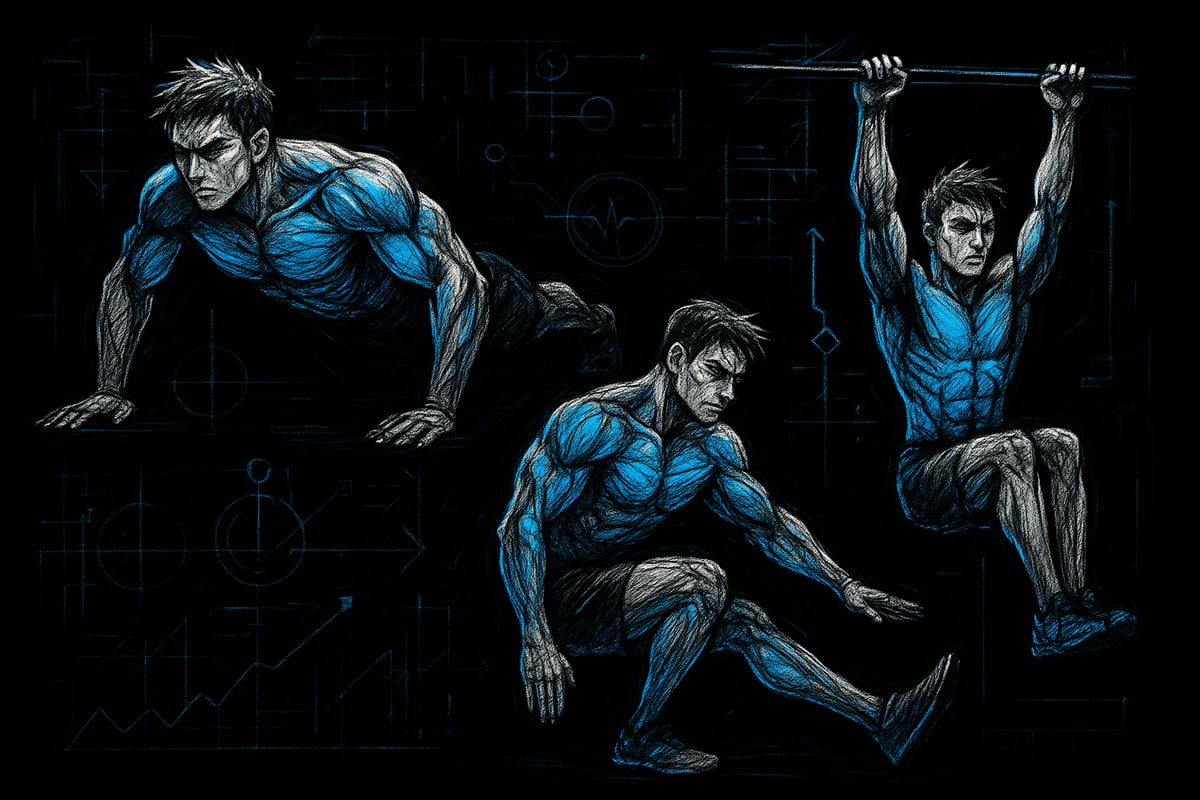
Forget isolation. True progress comes when your entire body is forced to work as a system. Total body weight exercises like push-ups and pull-ups recruit chest, shoulders, core, and back—all at once. This is not theory, it is basic physiology.
Look at the research. Compound movements stimulate more muscle fibers in less time. For example, a single explosive push-up triggers chest, triceps, abs, even the lats. The body craves this challenge. That is why athletes who master these moves see faster, more sustainable gains. For a deeper dive, check out the Science behind bodyweight training for a technical breakdown of muscle activation and adaptation.
Neurological Adaptation and Skill Development
Muscles are only half the story. The nervous system drives everything. When you train with total body weight exercises, you are not just building muscle—you are teaching your brain to coordinate, stabilize, and react.
Studies show skill-based bodyweight work improves motor learning by up to 30 percent over traditional lifts. That means better balance, quicker reflexes, greater control. The result? You move like an athlete, not a robot. This is real athletic intelligence.
Injury Prevention and Joint Health
Most injuries are not bad luck. They are a direct result of poor movement and lack of control. Total body weight exercises demand strict form, full range, and constant body awareness.
Protocols that focus on mobility and control reduce overuse injuries. Data proves bodyweight training is linked to lower injury rates than machine-based workouts. Your joints stay healthy, your body remains resilient. That is how you train for life, not just a season.
Scalability and Accessibility
No fancy equipment. No gym membership required. Total body weight exercises adapt to you, not the other way around. Whether you are a pro athlete or a retiree, you can scale every movement up or down.
Progressions and regressions make these exercises accessible for every age, injury history, or fitness level. That is why they are trusted by everyone from elite competitors to rehab specialists.
Holistic Fitness: Strength, Flexibility, and Endurance
Total body weight exercises do not just build muscle. They forge strength, flexibility, and cardiovascular power—simultaneously. This is a training approach designed for humans, not machines.
The benefits go beyond the mirror. Better posture, more energy, greater resilience against stress. When you master these movements, you unlock a level of freedom and athleticism that most people never experience.
9 Essential Total Body Weight Exercises for 2025 Fitness Success
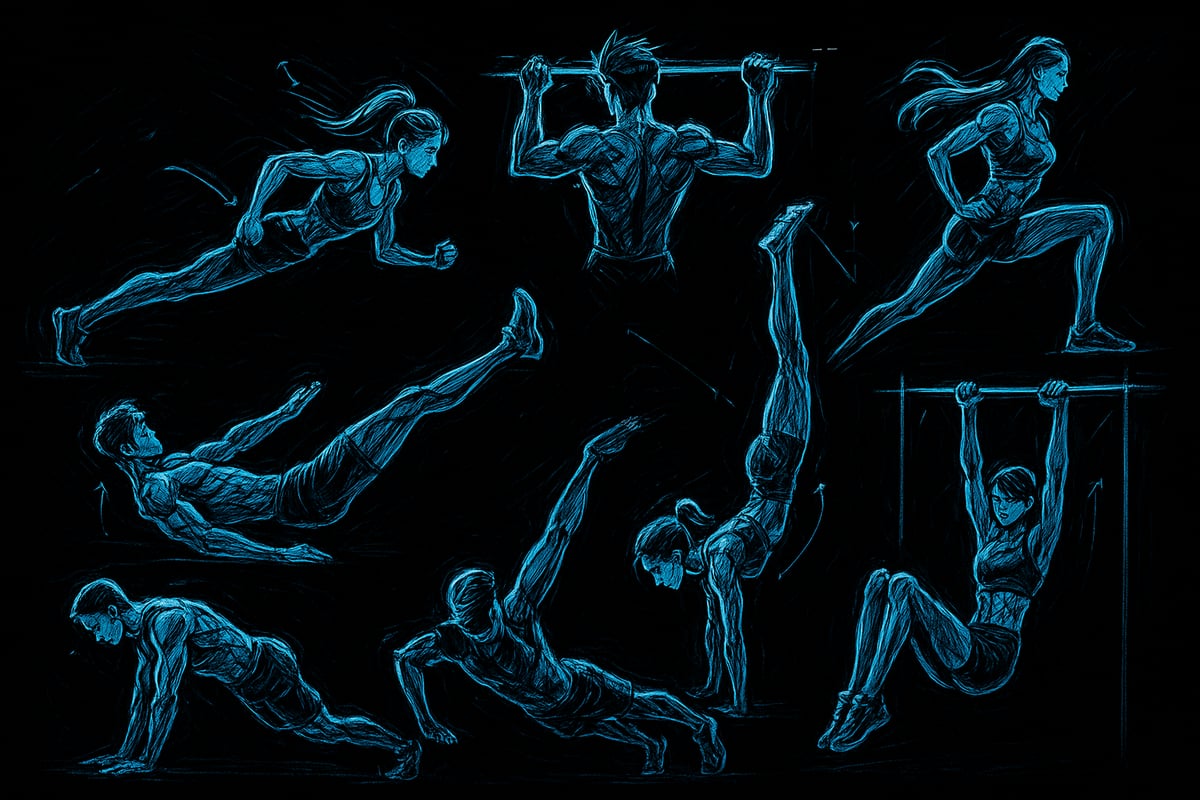
Forget the old script. If you want real results in 2025, you need to break out of the cycle of failed routines. Most people chase the next big trend, but the truth is, mastery starts with the basics. The secret? Total body weight exercises. These movements are the code that unlocks strength, mobility, and skill. They expose your limits—and then destroy them. If you’re tired of spinning your wheels, read on. These are the nine total body weight exercises every serious athlete needs to dominate in 2025. Want proof? Top coaches and elite movers agree: the future belongs to those who master their own body, not another machine. For even more insights, see this breakdown of the 10 Best Bodyweight Strength Exercises used by top performers worldwide.
Dynamic Push-Ups: Building Explosive Upper Body Power
Most gym routines teach you to grind. More reps, more weight, more of the same. But dynamic push-ups flip the script. Picture this: instead of slow, mechanical presses, you launch off the ground. Your body learns to produce force fast, not just grind through fatigue. That’s real-world strength. Why settle for bench numbers that don’t translate outside the gym?
Dynamic push-ups light up your chest, shoulders, triceps, and core—plus your nervous system. Athletes use them to build knockout power for punches, throws, and tackles. The difference is clear: static lifts build muscle, but dynamic push-ups build athleticism. They demand control, coordination, and explosive intent.
The best part? You can progress endlessly—clapping, archer, or even plyometric push-ups on unstable surfaces. Each variation exposes weaknesses, then forges new capacity. It’s like tuning a race car instead of just adding weight to the trunk. If you want to break plateaus and shock your system, dynamic push-ups are the answer. These are not just another move—they’re the ignition switch for total body weight exercises that matter.
Single-Leg Squats: The Ultimate Lower Body Challenge
Most people think squats are king. But single-leg squats are the real test. Why? Because life and sport rarely happen on two legs at once. Bilateral lifts let imbalances hide. Unilateral training forces you to confront them head-on.
Single-leg squats build strength, balance, and bulletproof knees. Every rep is a diagnostic tool. If you wobble, your body tells you exactly what needs work. Rehab specialists use them to rebuild ACLs and prevent injuries before they start. This is not just about muscle—it's about control, stability, and movement IQ.
Ever tried a pistol squat? It exposes every weakness from your toes to your hips. If you want to move with confidence and power, single-leg mastery is non-negotiable. In the world of total body weight exercises, this is the gold standard for lower body resilience. You’ll never look at squats the same way again.
Pull-Up Variations: Unlocking Vertical Strength and Mobility
Pull-ups are the truth serum for upper body strength. Machines lie. Cables lie. But your bodyweight never does. Can you pull yourself up, or not? That’s the question.
Pull-up variations take things even further. Want a grip like a vice? Try towel pull-ups. Need scapular control? Work slow eccentrics. Chasing total back development? Mix wide, neutral, and supinated grips. Each variation attacks a different weakness—and builds armor everywhere.
Athletes in every sport use pull-ups to upgrade posture and performance. A strong vertical pull means healthier shoulders and a back that moves with power, not pain. If you want to build a physique that’s as functional as it looks, you need vertical strength. Within the realm of total body weight exercises, pull-ups stand alone as a test of raw, honest ability.
Deep Lunge Patterns: Mobility Meets Strength
Stiff hips and ankles are the silent killers of athleticism. Most people squat shallow and wonder why they ache. Deep lunge patterns are the antidote. These aren’t just stretches—they’re loaded mobility drills that demand strength, flexibility, and stability in one shot.
Dancers, martial artists, and top movers all swear by deep lunges. Why? Because moving deep means unlocking hidden ranges. It’s about owning every inch of your movement. You want to jump higher, kick harder, or just get up off the floor pain-free? Start lunging deep.
Traditional gym squats can’t touch this. Deep lunges force your core, glutes, and stabilizers to work overtime. They teach your body to move like it was designed—not like a robot stuck in a rut. Among total body weight exercises, deep lunges are the secret sauce for lifelong mobility and pain-free power.
Hollow Body Holds: Core Mastery for Every Athlete
Forget sit-ups. They’re outdated. If you want real core strength—the kind that transfers to every movement—you need hollow body holds. This is the position gymnasts use to build “bulletproof” midsections. It’s not just about abs, it’s about total trunk control.
Hollow holds demand endurance, deep muscle activation, and perfect alignment. The result? A spine that’s protected, a body that moves as one. Every handstand, lever, and explosive jump starts here. Elite athletes know: mastery begins with the core.
Want to go deeper? Check out the Rock-Solid Core Body Holds guide for the science and progression behind this game-changing move. In the world of total body weight exercises, hollow body holds are the foundation everything else is built upon.
Handstand Progressions: Balance, Strength, and Confidence
Handstands are more than a party trick. They are the ultimate test of upper body control, balance, and mental focus. When you train handstands, you’re not just building muscle—you’re developing body awareness at the highest level.
Shoulder health? Check. Wrist strength? Check. Confidence? Through the roof. Practitioners report sharper focus and a sense of mastery that carries into every area of life. It’s not just about being upside down. It’s about breaking your old limits and rewriting what you thought was possible.
Every progression—wall holds, freestanding, presses—teaches you something new about your body. In the arena of total body weight exercises, handstand work is the doorway to a new level of athletic identity. Are you ready to flip your perspective?
Nordic Hamstring Curls: The Forgotten Backside Builder
Most routines ignore the backside. Big mistake. Your hamstrings are the brakes and the engine for explosive movement. Nordic hamstring curls target them like nothing else. Machines can’t replicate the demand or the reward.
Sports teams use Nordics to slash hamstring injuries. Why? Because they build strength where it counts—at the lengthened position, where most tears happen. The carryover is massive: faster sprints, stronger jumps, healthier knees.
If you want to run, jump, or move with power, you must train the backside. In the lineup of total body weight exercises, Nordics are the unsung hero. They don’t just build muscle—they bulletproof your entire kinetic chain.
Archer Push-Ups: Advanced Unilateral Strength
Think regular push-ups are enough? Think again. Archer push-ups push the limits of single-arm strength, stability, and muscular symmetry. Each rep is a lesson in control. You can’t hide weaknesses here.
Calisthenics athletes rely on archer push-ups as the gateway to full one-arm push-ups. The unilateral demand exposes imbalances and forces your body to adapt. It’s not about ego—it’s about function. When one side lags, the archer reveals the truth.
This move bridges the gap between strength and skill. In the universe of total body weight exercises, archer push-ups are for those who want to reach the highest levels of body control. Want a body that’s balanced, resilient, and ready for anything? Start here.
Hanging Leg Raises: Dynamic Core and Hip Power
Hanging leg raises are a litmus test for real core and hip strength. Forget crunches. This move integrates grip, hip flexors, and abdominals in one fierce package. Fighters, gymnasts, and sprinters use hanging leg raises to build explosive lower body control and spinal health.
Every rep demands stability from your shoulders to your toes. The result? A core that can handle anything—kicks, jumps, even heavy lifts. Plus, hanging work develops grip endurance, a crucial but overlooked asset in total body weight exercises.
If you want a core that’s as functional as it is strong, hanging leg raises are non-negotiable. They don’t just look impressive—they deliver results you can feel in every part of your game.
The Power of a Systematic, Skill-Based Bodyweight Approach
Forget random workouts. Stop chasing sweat and soreness. Structure is the difference between spinning your wheels and real progress. Most people try to patchwork routines from social media. They get bored, frustrated, and quit. Why? No plan, no progression, no mastery.
A systematic approach to total body weight exercises is non negotiable. You need a map, not a maze. Programs built on progression and skill development turn scattered effort into lasting results. If you want to break the cycle, start with a framework. For a deep dive, check out Bodyweight Strength From Scratch for a blueprint that actually works. You do not build a strong body by accident. You do it with intent, structure, and total body weight exercises that force adaptation.
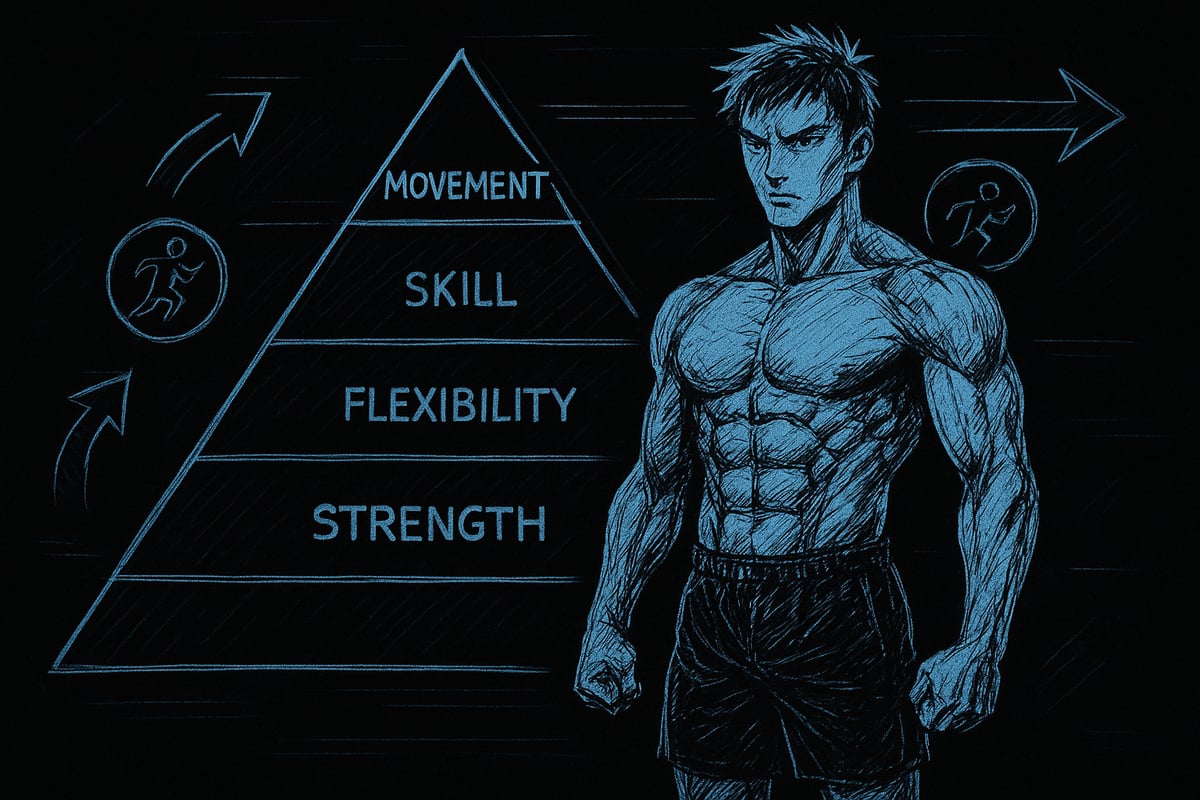
1. Moving Beyond Random Workouts: Why Structure Matters
You cannot out train chaos. Jumping from trend to trend leaves you stuck in the same rut. Ninety percent of people who follow structured total body weight exercises hit their goals faster than those winging it.
A system is the secret weapon. Every move, every progression, every rest day exists for a reason. When you build skill on purpose, you build a body that lasts. Your workouts stop being punishment and start being practice. Structure breeds confidence. It turns effort into evolution. If you want to break the plateau, you need a roadmap, not random noise.
2. The 10 Pillars of Body Mastery: A Proven Framework
Real transformation demands more than muscle. The 10 Pillars of Body Mastery are the backbone of every effective system. They cover every angle: movement, strength, flexibility, skill, endurance, mind, nature, recovery, resilience, sustainability.
Pillar | Why It Matters |
|---|---|
Movement | Foundation of all athleticism |
Strength | Power and protection |
Flexibility | Freedom, injury-proofing |
Skill | Precision, control |
Endurance | Lasting energy |
Mind | Focus, discipline |
Nature | Real-world adaptability |
Recovery | Growth, longevity |
Resilience | Bounce back from setbacks |
Sustainability | Fitness for life |
This framework separates the strong from the stagnant. It is not just about looking fit, but moving with power. For more on the science behind these methods, see Bodyweight training: A return to basics for the fundamentals that span decades.
3. Real-World Transformations: Stories of Body Mastery
These are not theories. They are lived results. Thousands have rebuilt movement and strength after injury, stagnation, or age. Over 5,000 people across 20 countries have used structured total body weight exercises to reclaim their athleticism.
Picture someone who could not squat without pain. Now, they move with freedom. Or the busy parent who thought fitness was out of reach—now they master new skills every month. The difference? A commitment to skill-based progression. The results are not magic. They are method.
4. Why 2025 Is the Year for Total Body Weight Mastery
The world is waking up. Equipment is optional. Mastery is not. The demand for sustainable, equipment free fitness is exploding. In 2025, total body weight exercises are not just a trend—they are the standard.
This is your window to break free from failed routines. To build a body that works as hard as you do. The right system will unlock strength, skill, and resilience you did not know you had. Make 2025 the year you step up, get intentional, and finally achieve lasting change.